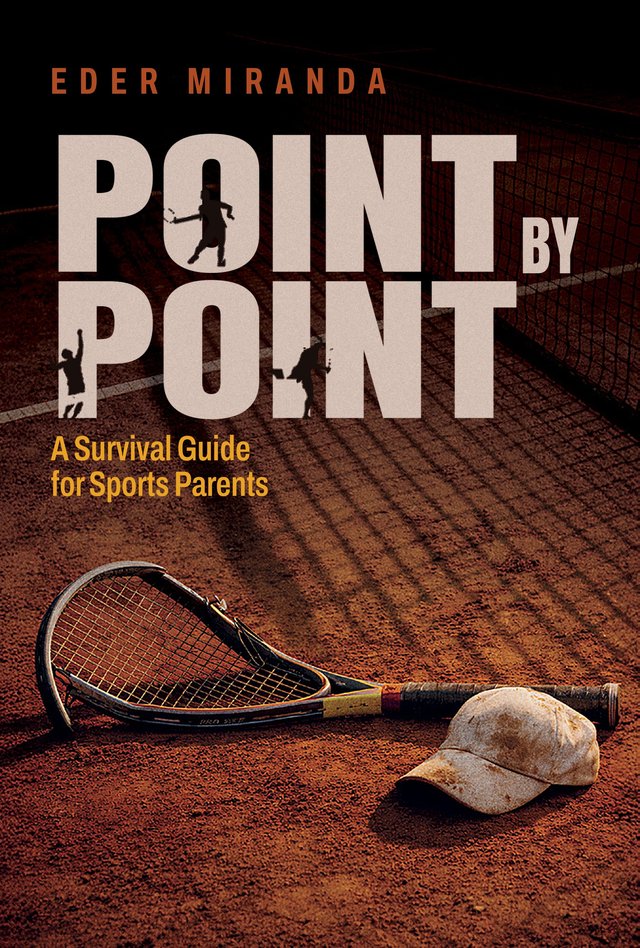
Point by Point
A Survival Guide for Sports Parents · Eder Miranda
The car ride home after a game can bring you and your child closer. This book shows you how.
Eder Miranda raised three young athletes. His oldest went on to play the Junior Davis Cup, the Roland Garros Junior Series and the Australian Open Junior Series. Along the way Eder learned the most valuable skill a sports parent can have: stepping out of the coach's role and being Dad again.
Get the book
What's inside
- Emergency protocols for the hardest moments: what to do, and what never to do, when your child loses an important match or refuses to shake hands after a loss.
- A protocol by age (6 to 8, 9 to 12, 13 to 16 and 17+) with goals, warning signs and the science behind each phase.
- The 10 Commandments of the Sports Parent, each one backed by research in sport psychology.
- A quick checklist before every tournament, warning signs that it's time to stop and rethink, and phrases to keep in mind during the match.
Questions parents ask
What should I say to my child after a loss?
Less than you think. The book's protocol: stay in your seat until your child comes to you, skip the technical analysis on the way off the court and don't ask "What happened?". In the car, offer a choice: "Do you want to talk, or would you rather have some music?". At home: "Take a shower, get some rest. If you need me, I'm here." After a loss the part of the brain that controls emotions goes temporarily offline, so a sad child needs a hug, not a lecture.
How do I support my child without becoming their coach?
Let the coaches do their job and take care of what only a parent can: the logistics, the money and being emotionally available. From 13 to 16 the goal is to support without steering, because a teenager needs an identity of their own, not to become an extension of their parents' dreams.
Is this book only for tennis parents?
No. The stories come from the tennis courts, where the author's family lived this journey. The protocols and the 10 commandments work for parents of kids in any competitive sport: tennis, soccer, swimming or any other.
What ages does it cover?
From the first tournaments to adulthood. The guide has a protocol for each phase: 6 to 8 (discovery), 9 to 12 (development), 13 to 16 (definition) and 17 and up (independence).
Who wrote it?
Eder Miranda, a father of three athletes. The book was first published in Portuguese as Ponto a Ponto. The foreword is by sports psychologist Lais Yuri.
About the author
Eder Miranda is a father of three athletes. He writes about what it takes to support a child in competitive sport without losing the relationship along the way.
Also available in: Português: Ponto a Ponto · Español: Punto a Punto